President Trump is considering renaming Lake Ontario “Lake America.” He has also caught fish and seafood in his tariff net: 25% U.S. tariffs briefly applied to Canadian seafood in March 2025 before being suspended, while Canada is now preparing a 25% tariff on American fish and seafood. That raises an obvious question: which side of the border do the fish belong to?
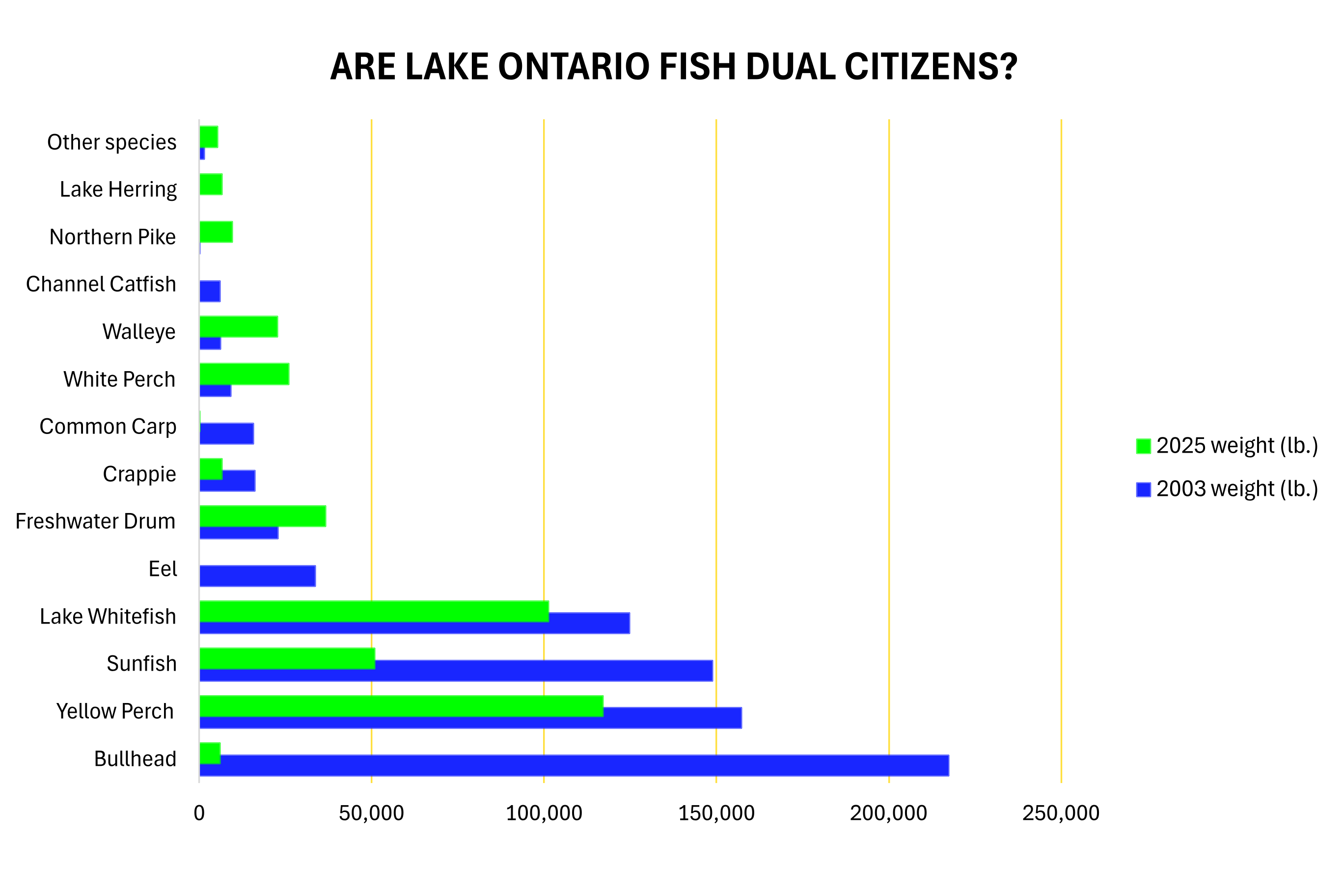
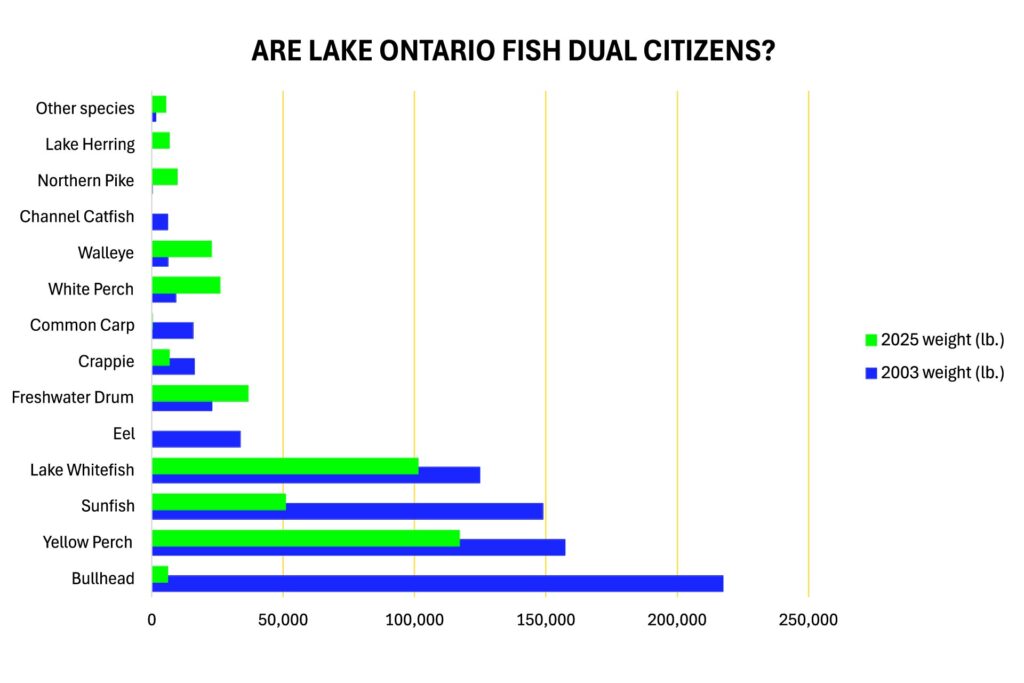
Ontario’s reported commercial harvest has changed dramatically since 2003. Bullhead led the catch at more than 217,000 pounds, followed by yellow perch, sunfish and lake whitefish. By 2025, yellow perch had moved into first place, while freshwater drum was among the relatively few species harvested in greater quantities than two decades earlier. Commercial fishing is not a major Ontario industry, but it still provides jobs and income for fishing families, processors and associated businesses, some of whom have operated for over 100 years. It also operates alongside decades of Canadian investment in cleaning up the Great Lakes, restoring habitat and improving water quality.
Most intriguingly, more than 33,000 pounds of Eel were harvested in 2003, but none were reported in 2025. Whether they crossed the border, changed citizenship or simply refused to complete the customs paperwork is not recorded. The border is invisible, the fish are mobile and tariff forms are not waterproof.