Well, we should know. Just take a walk through Toronto's neighbourhoods during October. Halloween has certainly changed over the years. What was once a carved pumpkin on the porch has become an elaborate production, complete with graveyards, giant skeletons, haunted houses, spooky lighting and moving displays. In neighbourhoods such as Cabbagetown, High Park, the Beaches and parts of the west end, some residents go to extraordinary lengths to decorate their homes. Social media has added another dimension, with pictures and videos drawing visitors from other parts of the city. Increasingly, Halloween is becoming a destination event, with families travelling beyond their own neighbourhoods to enjoy the displays and go trick-or-treating.
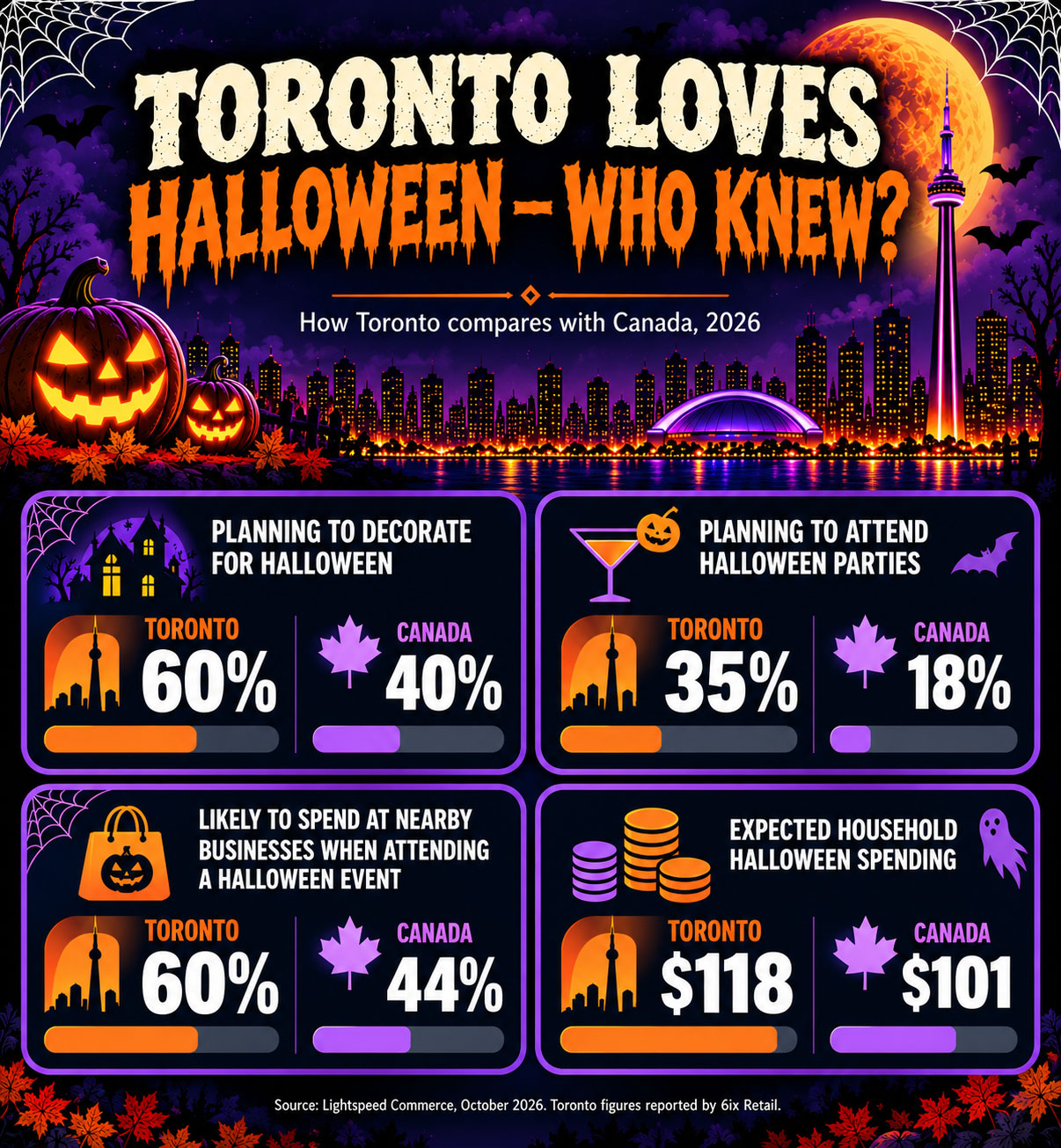
New research from Lightspeed Commerce suggests that Toronto really does love Halloween, perhaps more than the rest of Canada. Some 60% of Torontonians plan to decorate their homes, compared with 40% nationally, while 35% expect to attend Halloween parties, almost twice the Canadian average of 18%. Toronto households also expect to spend $118 on Halloween this year, compared with $101 nationally. And Halloween isn't just for children anymore. Adults are spending more on costumes, decorations, parties and entertainment. With Halloween falling on a Saturday this year, restaurants, bars and local businesses could benefit from the festivities. In fact, 60% of Torontonians attending Halloween events say they are likely to spend money at nearby businesses, compared with 44% nationally.
And then there is the candy. Many Canadians might be surprised to learn how much of their favourite Halloween chocolate is manufactured right here in Toronto. Nestlé's Sterling Road factory produces KitKat, Aero, Smarties and Coffee Crisp, while Mondelēz's Gladstone Avenue plant manufactures Caramilk, Cadbury Dairy Milk, Mr. Big, Wunderbar and other familiar treats. In September, Nestlé announced the completion of an investment of more than $50 million in its Toronto chocolate factory, supporting local manufacturing and production capacity. Behind those little chocolate bars are hundreds of manufacturing jobs, along with employment in packaging, transportation, warehousing and retail. Halloween may only last one night, but the economic activity it generates extends well beyond October 31. And perhaps most importantly, it brings neighbours together, makes our streets a little more interesting and gives us something to celebrate.
More treat than trick, indeed.