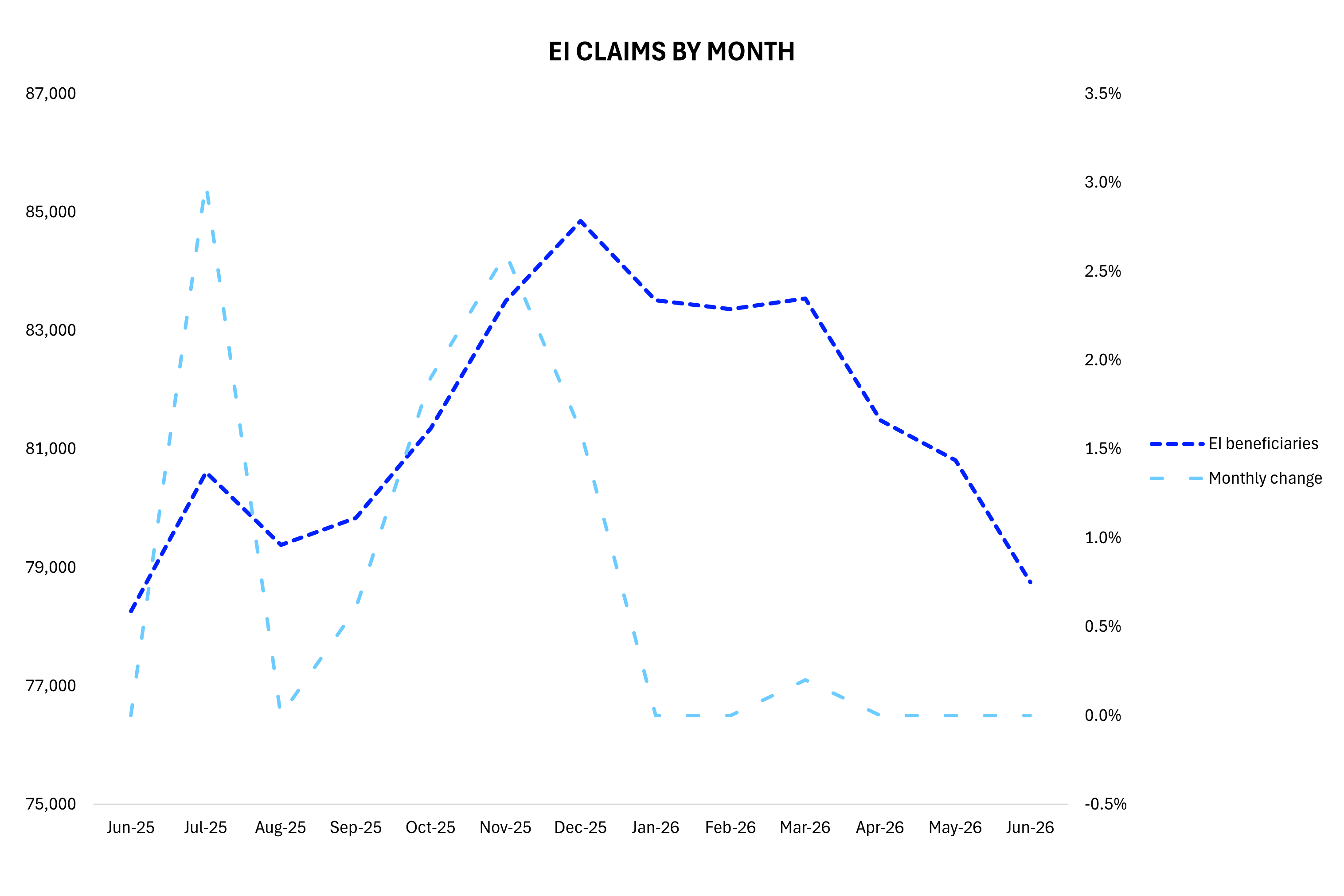
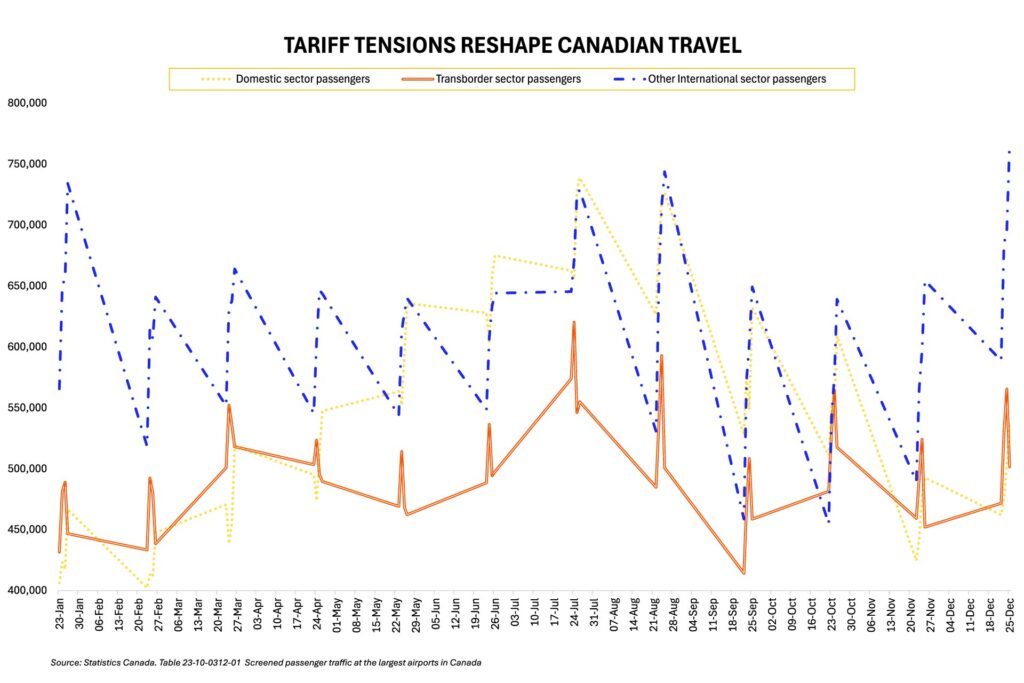
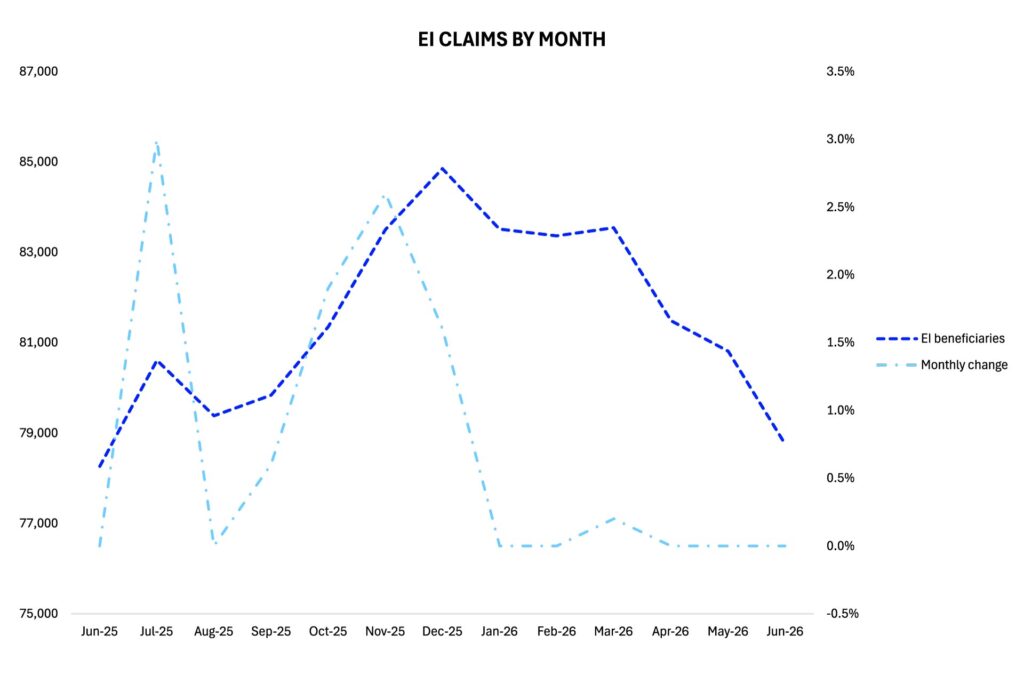
Right now, Canada is locked in negotiations over the US's threat to impose 50% Tariffs on Canadian goods. Donald Trump’s tariffs and repeated tariff threats created real uncertainty for Ontario employers, particularly in manufacturing, steel, autos and other trade-dependent sectors. That pressure is visible in Toronto’s EI numbers, which climbed through late 2025 before peaking in December. But the trend has since reversed: by June 2026, EI beneficiaries had fallen 7.2% from that peak and were almost exactly where they had been a year earlier. Toronto’s economy has proven more resilient than many expected and it appears to be improving.
Canada may also be entering trade negotiations from a stronger position than the headlines suggest. Statistics Canada reported that the economy grew 0.3% in May, with both goods and services expanding, while RBC recently raised its estimate of Canadian second-quarter growth to 3.4%; more than twice the United States’ reported 1.5% growth. The U.S. also lost 23,000 jobs in July. Canada has certainly felt the tariffs, but it has not buckled under them. As Ottawa’s latest economic update put it, the economy “avoided the recession many had predicted.” That gives Canada a credible argument that a fair trade deal is in both countries’ interests and that we are negotiating from resilience, not desperation