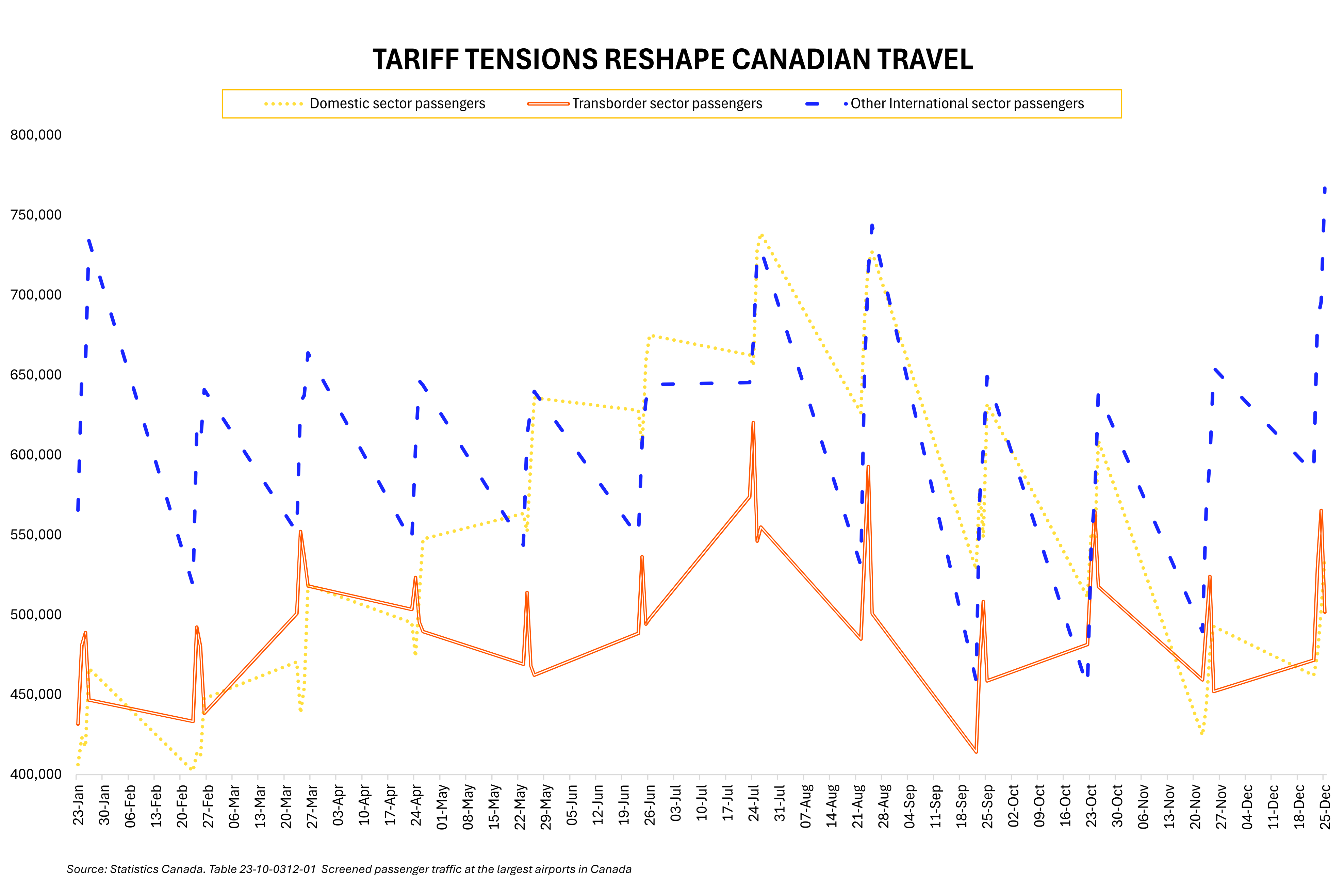
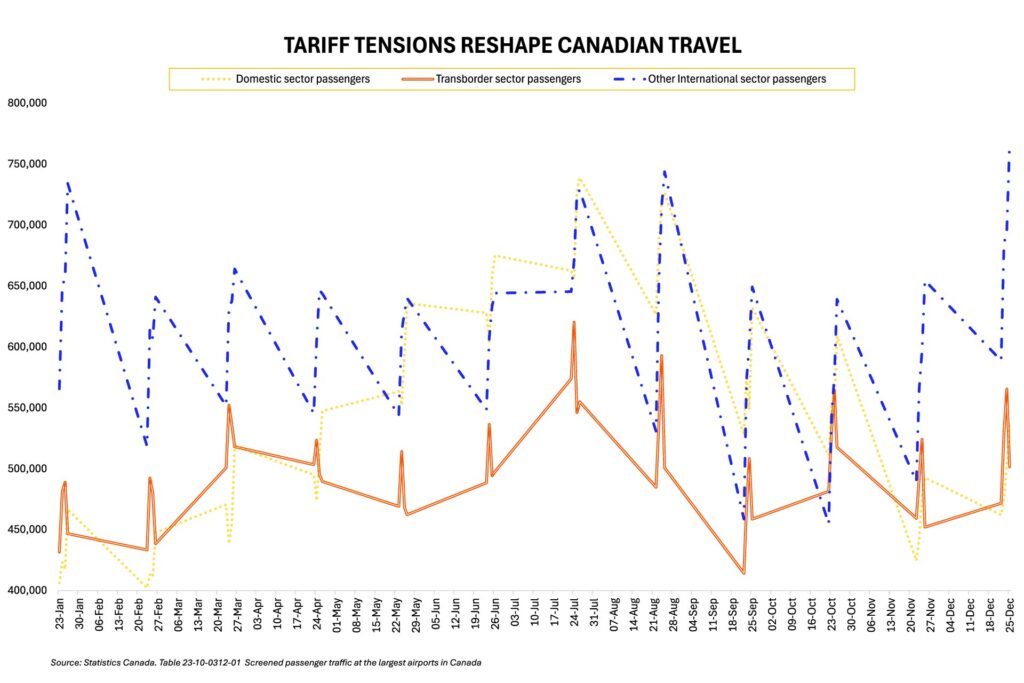
As tariff and political tensions between Canada and the United States have escalated, Canadians began changing where they travelled. Canadian-resident border crossings returning from the United States fell 25.4% in 2025. At Toronto Pearson, transborder passenger traffic declined 8.3%, while domestic traffic increased 6.6%. During the first seven months of 2026, domestic traffic rose another 6.7%, while transborder traffic remained 2.9% lower.
In these data, transborder refers specifically to flights between Canada and the United States. Other international refers to flights between Canada and countries other than the United States. The decline is therefore concentrated in U.S.-related travel. By July 2026, total screened traffic at Pearson had reached a new high of just over 2.05 million. Compared with July 2024, domestic traffic was 12.6% higher and other international traffic was 8.7% higher, while transborder traffic remained 10.5% lower. Canadians have not stopped travelling, but more travel appears to be occurring within Canada or outside the United States.
National tourism data reinforce this conclusion. Canadian residents made 90.6 million domestic visits in the second quarter of 2025, an increase of 10.9% and the highest second-quarter total since the survey began in 2018. The shift is economically important. More than 52,000 people work at Pearson for over 400 employers, in jobs spanning airline and airport operations, security, baggage and ground handling, cargo and logistics, skilled trades and maintenance, construction, hospitality, retail, food services and customer service. Pearson estimates that the airport supports more than 133,000 jobs.