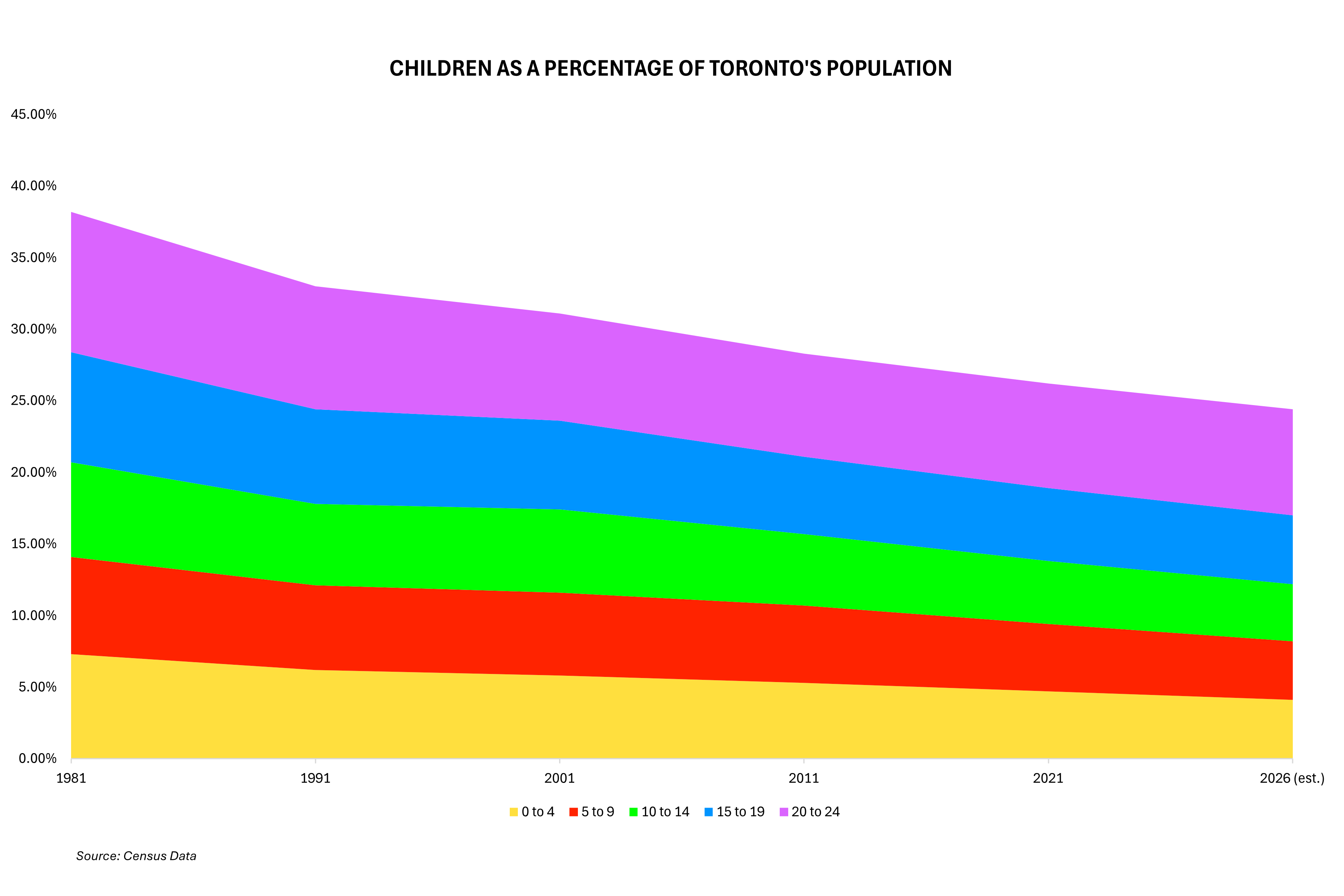
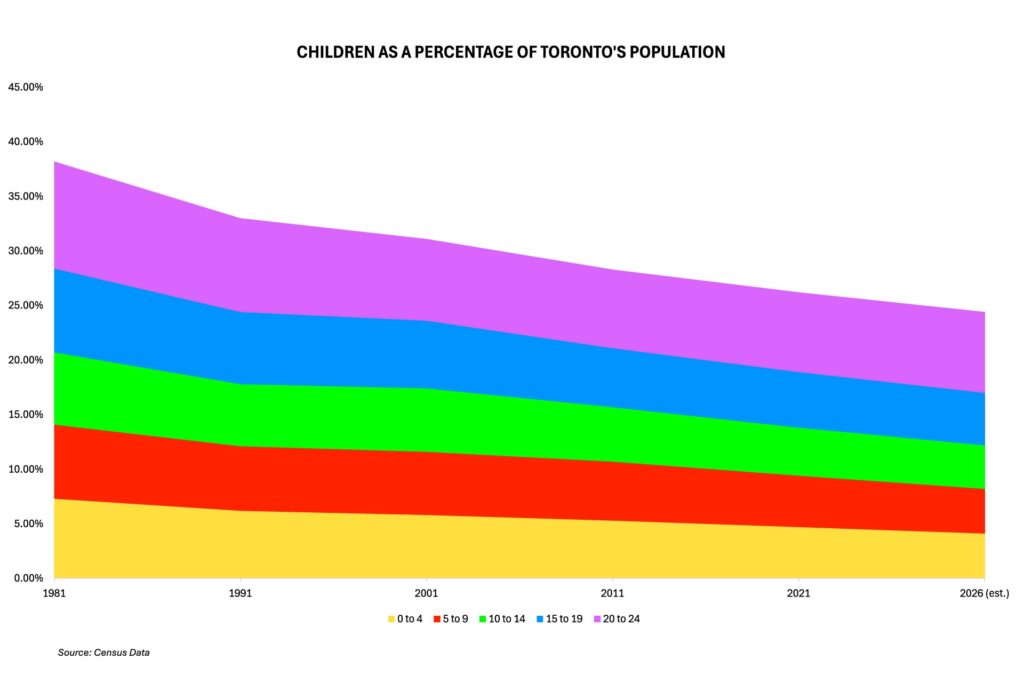
June 1st was International Children's Day. We thought it was a good opportunity to look at the number of children living here. Toronto's total population grew roughly 43% between 1981 and 2026, while the share of residents under 20 has fallen from 28% to 17%. For decades, Toronto has been largely insulated from the demographic pressures facing many other parts of Ontario. Strong immigration, a steady influx of young adults, and population growth have helped offset declining birth rates and an aging population. As a result, concerns about shrinking youth populations have often seemed more relevant to smaller communities than to Canada's largest city. However, this chart indicates that we can no longer ignore the trend. The decline has been steady across every youth age group, from preschoolers to teenagers, even as the city's overall population continued to grow. Children are becoming a smaller part of Toronto's demographic makeup, raising important questions.
The implications extend beyond demographics. Fewer children today means fewer students in many neighbourhood schools, a smaller pool of future workers, apprentices, and skilled tradespeople, and greater reliance on immigration to support labour force growth. At the same time, rising housing costs continue to make it more difficult for many families to remain in the city as their housing needs change. Toronto remains a growing and dynamic city, but the demographic trends emerging beneath that growth deserve attention. The challenge for the coming decades may not be attracting people to Toronto; it may be ensuring that young families can afford to stay and that the next generation has a place in the city's future.