AI headlines have taken a dramatic turn lately, with researchers and technology experts in the area warning that increasingly powerful AI systems could eventually pose risks to humanity. While much of that conversation is about what might happen months or years from now, a more immediate shift is already happening: AI is reshaping how Canadians do their jobs.
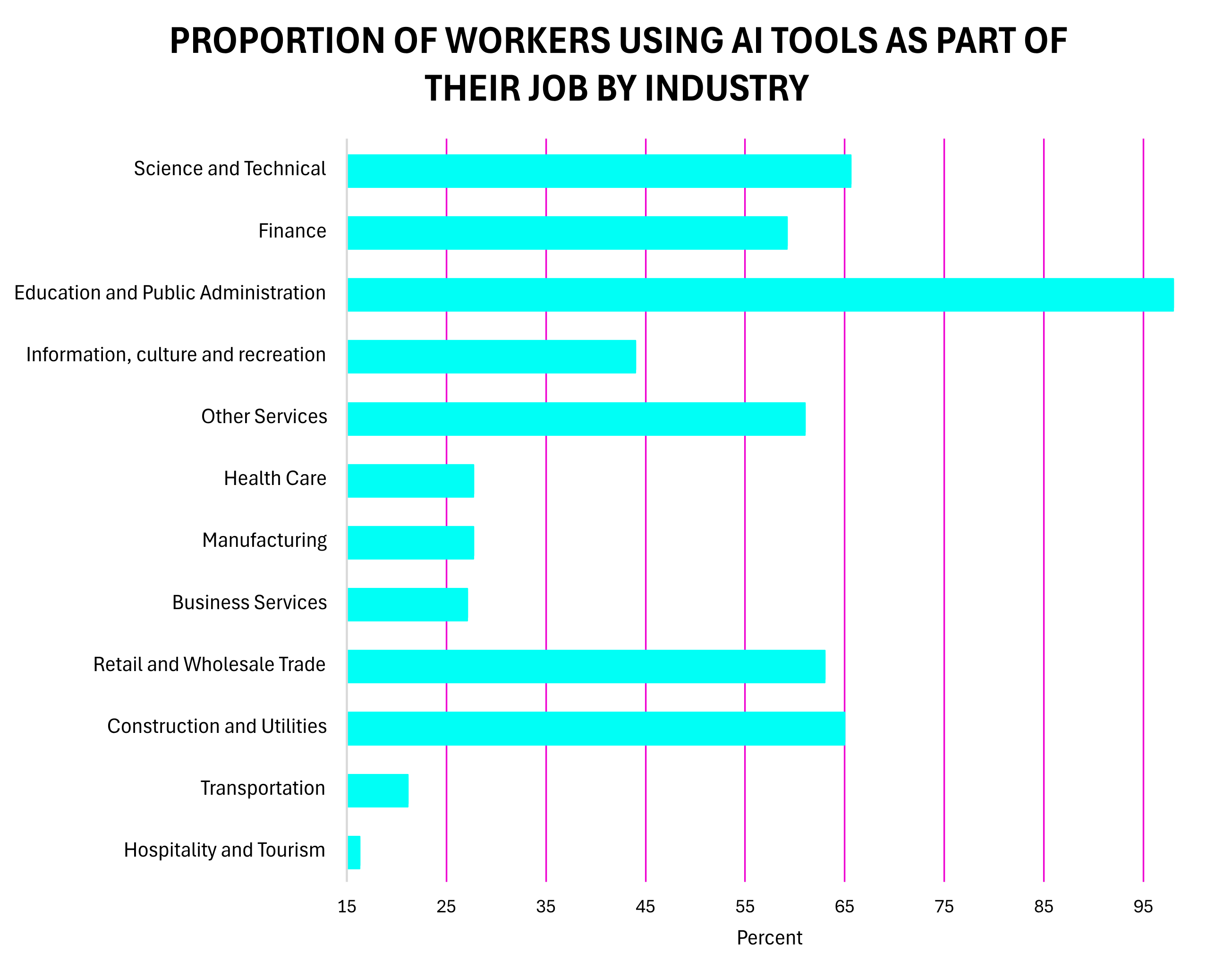
The chart represents March 2026 data that captures workers who had used generative AI for their job at some point during the previous 12 months. The pattern suggests that AI is finding its way more readily into industries where work was already highly digital. Industries where employees spend much of their day working with computers- analyzing information, writing, researching, processing data or producing digital content appear to offer many more opportunities to incorporate generative AI into everyday tasks.
There also seems to be an education and occupational dimension to this pattern. Many industries with high AI use employ relatively large numbers of workers in professional occupations that typically require post-secondary education. At the other end are industries such as Transportation, Construction, Retail, and Accommodation and food services, where physical or customer-facing work is more common and where many entry-level opportunities are found.
This raises a bigger question: are we seeing an AI divide, or simply an existing digital divide showing up in a new form? A worker who already spends most of the day on a computer can experiment with AI for writing, research, analysis or administrative tasks almost immediately. For someone whose job centres on driving a truck, preparing food, moving goods or working on a construction site, the obvious opportunities to use a chatbot or other generative AI tool during the workday are much more limited.
That distinction could become important for workforce development. If learning to use AI increasingly happens through using it at work, workers in digitally intensive jobs may accumulate AI experience much faster than workers elsewhere. Also, it suggests that workers in highly exposed sectors may increasingly need AI literacy alongside critical thinking, judgment and subject-matter expertise, while employers and training providers will need to keep pace with how quickly those skill requirements evolve.
So, while the headlines ask whether AI will eventually take over humanity, Canada's more immediate labour market question may be simpler: who is already working with AI, who isn't, and what does that gap mean for the skills workers will need next?