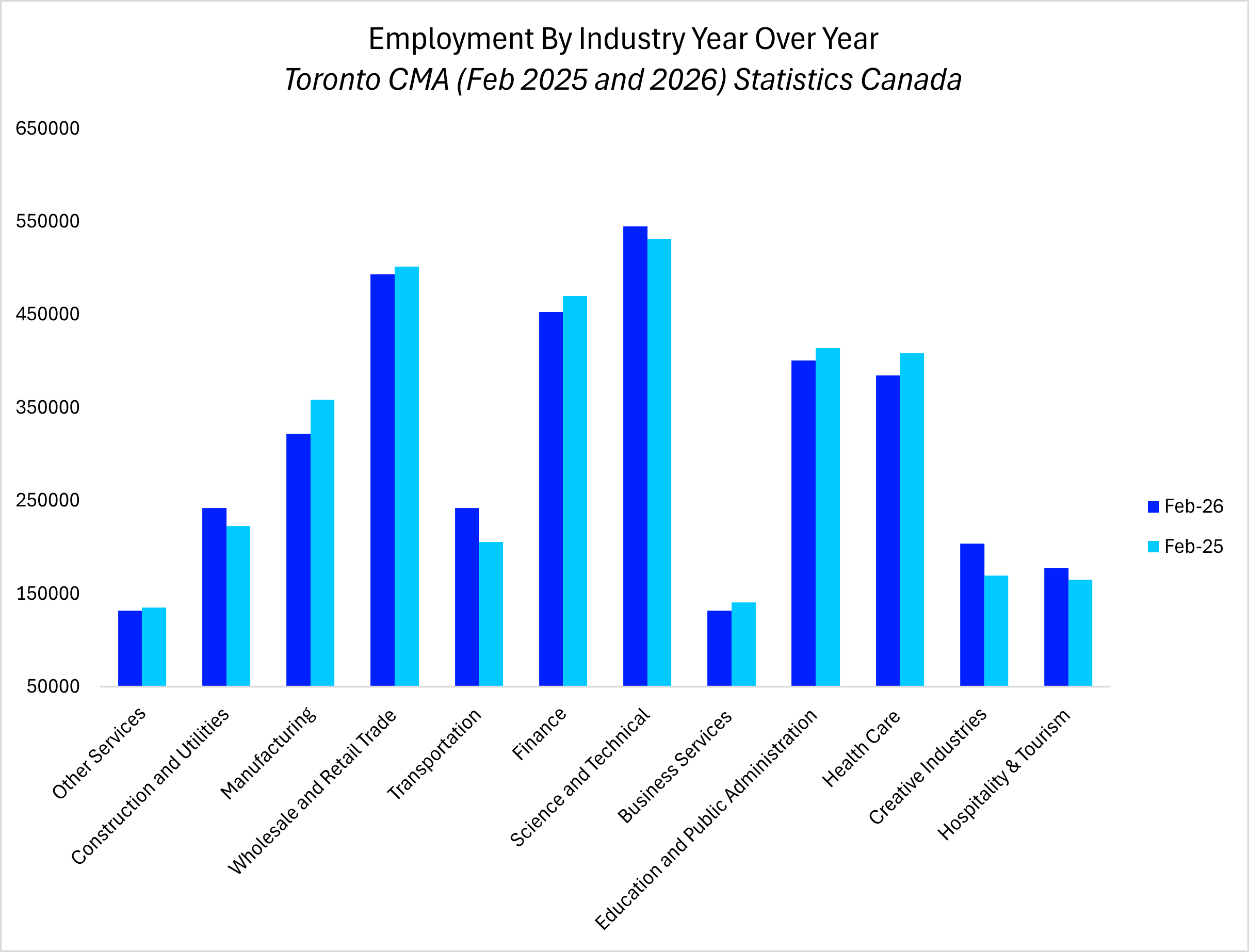
Employment in the Toronto CMA remained broadly stable in February 2026 (3.73M), with only modest month-to-month movement. Unemployment creeped up slightly to 8%, mostly due to the increase in jobseekers. However, recent trends continue to reflect growing uncertainty tied to U.S. trade policy.
Manufacturing declined again in February, continuing a steady downward trend since mid-2025. In contrast, transportation and warehousing, which had surged through late 2025, edged down this month but remains well above year-ago levels, pointing to ongoing supply chain adjustments rather than sustained growth.
Construction employment increased slightly month-over-month and continues to trend upward, though this likely reflects existing project pipelines. Meanwhile, accommodation and food services fell again in February, reinforcing signs of softer consumer demand. Wholesale and retail trade saw a modest uptick, suggesting some short-term stabilization after declines late last year.
Professional and technical services also eased slightly this month, indicating a more cautious hiring environment.
Overall, the data points to a labour market that is not weakening sharply, but continuing to adjust month-to-month under trade-related uncertainty — with losses concentrated in production and gains or stability in logistics and construction.
We are often asked about the impact of AI on jobs. At this stage, there is no clear evidence in the monthly data of AI-driven job displacement. Current changes are much more closely tied to trade dynamics and economic uncertainty.