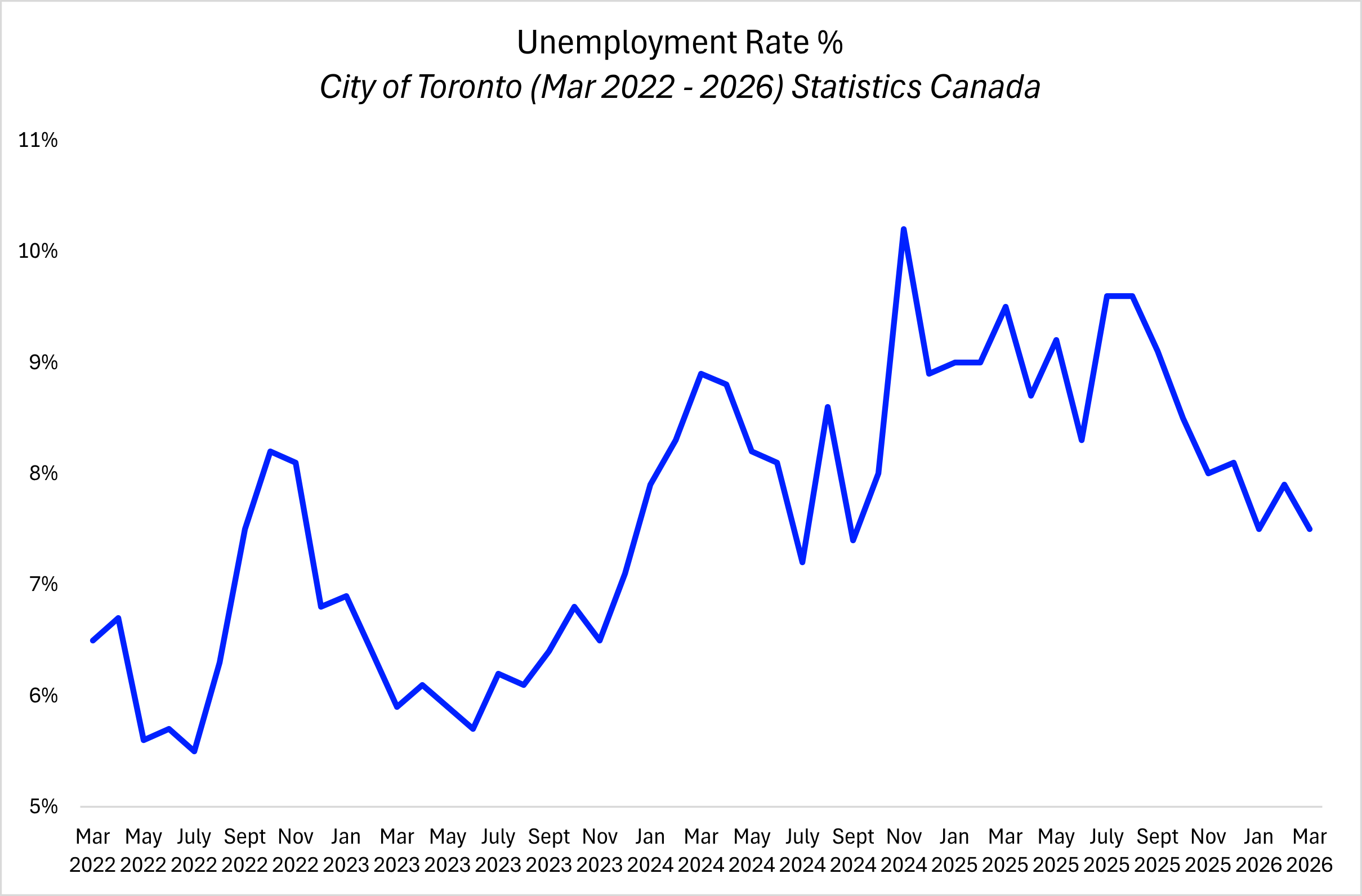
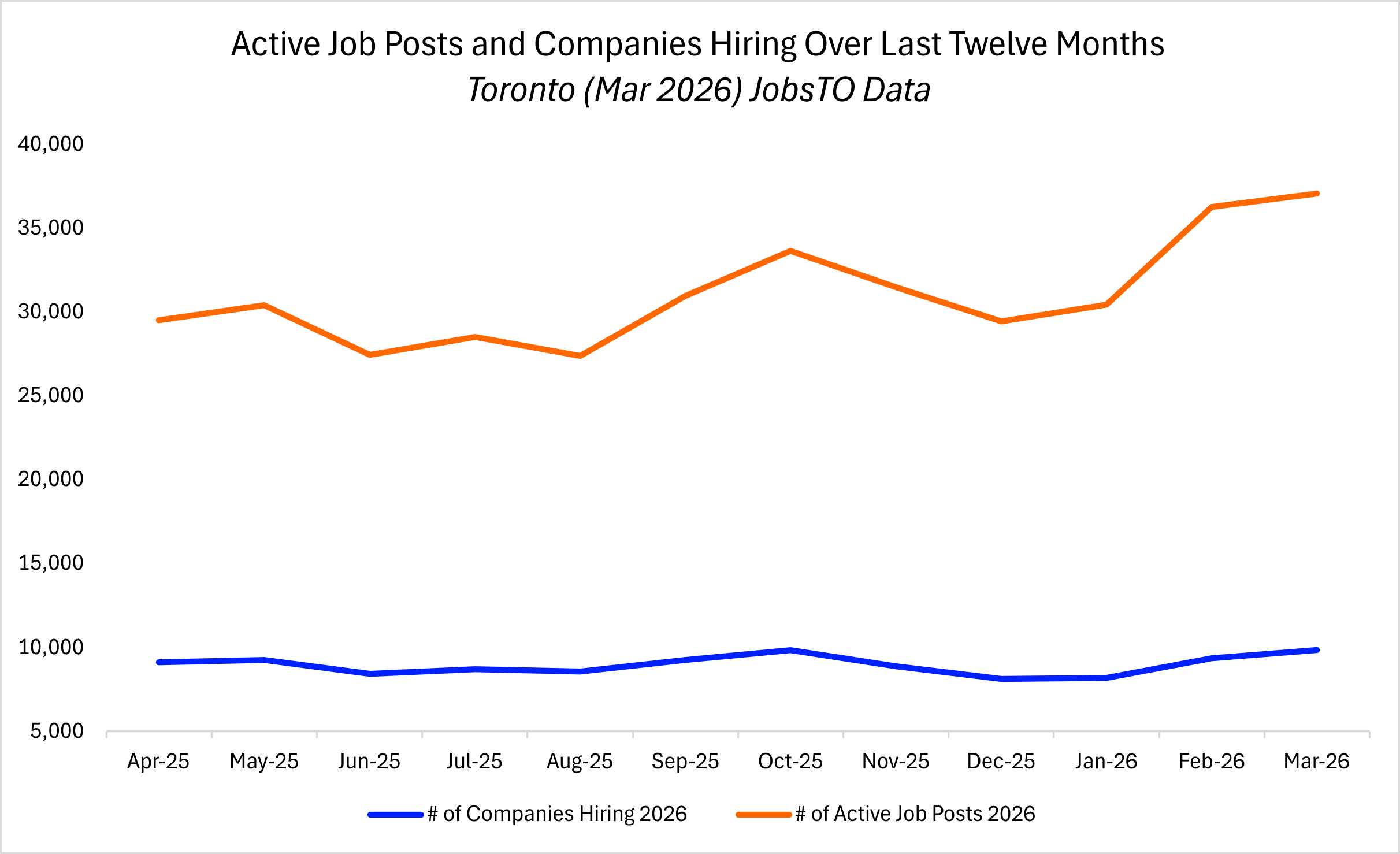
Job postings in March 2026 reflect a split economy, with strong demand at both the high-skill and frontline service ends of the labour market. Financial roles lead postings, including banking, credit, and investment managers (811), financial managers (323), and customer service representatives in financial institutions (359), pointing to continued strength in Toronto’s finance sector. At the same time, persistent demand for food counter attendants (658), cooks (424), and food service supervisors (365) highlights ongoing churn and labour shortages in hospitality. Retail roles also remain prominent, with retail salespersons (575) and trade managers (319) continuing to be in demand despite softer consumer conditions. Meanwhile, steady postings for registered nurses (355) underscore ongoing pressures in health care, and administrative officers (346) reflect baseline organizational demand across sectors. Overall, hiring is concentrated in essential services, finance, and high-turnover occupations, reinforcing the sense of an economy maintaining core functions rather than expanding into new growth areas.
| Job Title |
Number of Posts |
| Banking, Credit and Other Investment Managers |
811 |
| Food Counter Attendants, Kitchen Helpers and Related Support Occupations |
658 |
| Retail Salespersons and Visual Merchandisers |
575 |
| Cooks |
424 |
| Food Service Supervisors |
365 |
| Customer Services Representatives - Financial Institutions |
359 |
| Registered Nurses and Registered Psychiatric Nurses |
355 |
| Administrative Officers |
346 |
| Financial Managers |
323 |
| Retail and Wholesale Trade Managers |
319 |
Hiring by Sector
Toronto’s job postings continue to reflect a service-heavy economy with strong concentration in finance, professional services, health care, and retail. Over the past three months, hiring has remained broad-based but uneven, with finance and insurance dominating overall demand, while sectors like retail, accommodation and food services, and administrative support continue to show high volumes tied to turnover and replacement hiring. At the same time, knowledge sectors (professional, scientific, and technical services; information industries) remain elevated, reinforcing the city’s dual structure of high-skill growth alongside persistent frontline demand.
Job Postings by Sector (Last Three Months)
| Sector |
Postings |
| Finance and insurance |
4,178 |
| Retail trade |
2,487 |
| Health care and social assistance |
2,239 |
| Professional, scientific and technical services |
2,216 |
| Administrative and support services |
1,984 |
| Accommodation and food services |
1,025 |
| Information and cultural industries |
812 |
| Educational services |
756 |
| Other services (except public admin) |
532 |
| Manufacturing |
517 |
| Construction |
365 |
| Real estate and rental and leasing |
363 |
| Public administration |
334 |
| Wholesale trade |
316 |
| Transportation and warehousing |
188 |
| Arts, entertainment and recreation |
159 |
| Utilities |
97 |
| Management of companies |
80 |
| Mining and extraction |
6 |
| Agriculture and related |
12 |
Key Takeaways
- Finance dominates hiring: With over 4,000 postings, finance and insurance is the clear anchor of Toronto’s labour demand.
- Service economy remains central: Retail, hospitality, and administrative support collectively represent a large share of postings, driven by turnover and steady baseline demand.
- Health care pressure continues: Over 2,200 postings signal ongoing system strain and persistent recruitment needs.
- Knowledge sectors still strong: Professional services and information industries remain elevated, indicating continued demand for high-skill workers.
- Goods-producing sectors lag: Manufacturing (517) and construction (365) are comparatively modest, aligning with broader economic caution and slowing private investment.
- Public and institutional stability: Education and public administration postings suggest steady, non-cyclical hiring.
- Long tail of smaller sectors: Transportation, arts, and utilities show activity but are not driving overall labour demand.