When people think of apprenticeships and skilled trades, occupations such as electricians, welders, or heavy equipment technicians often come to mind. Less frequently discussed is the work of arborists; specialized professionals who plant, inspect, maintain, and safely remove trees in our communities. Arborists can be found working for utilities, landscaping companies, municipalities, conservation authorities, parks departments, and forestry operations, making them one of the most diverse occupations in the skilled trades.
Their responsibilities extend far beyond trimming branches. Arborists assess tree health, diagnose diseases and pest infestations, manage risks posed by damaged trees, perform precision pruning, and help ensure trees remain safe around homes, roads, power lines, and public spaces. In many ways, arborists serve as the "doctors" of the urban forest, helping trees live longer, healthier lives while protecting the people and infrastructure around them.
This work is particularly important in Toronto, which is home to millions of trees and one of the largest urban tree canopies in Canada. Healthy trees help reduce summer temperatures, improve air quality, absorb stormwater, support biodiversity, and make neighbourhoods more attractive places to live and work. Maintaining that canopy requires a skilled workforce capable of balancing public safety, environmental stewardship, and long-term tree health.
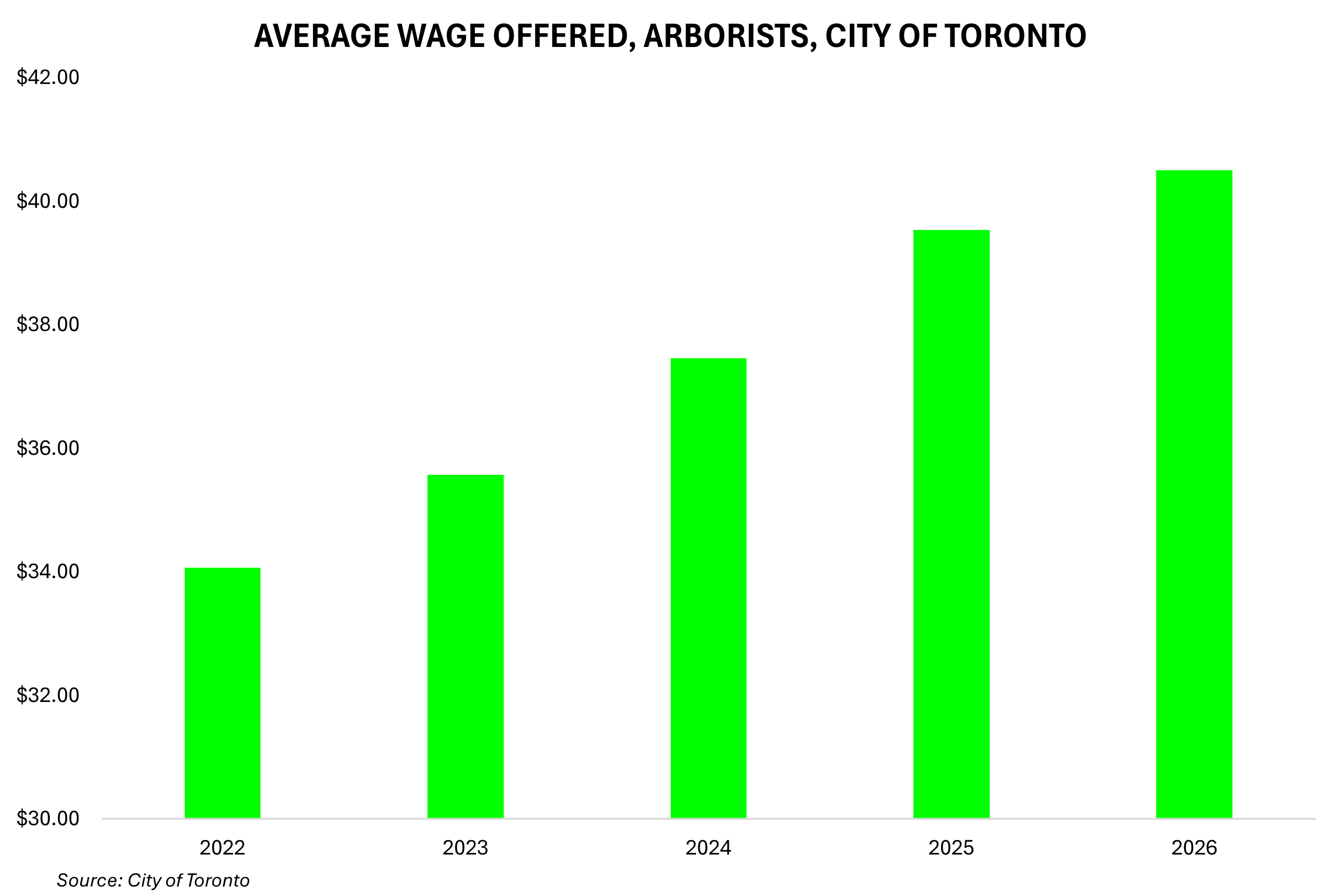
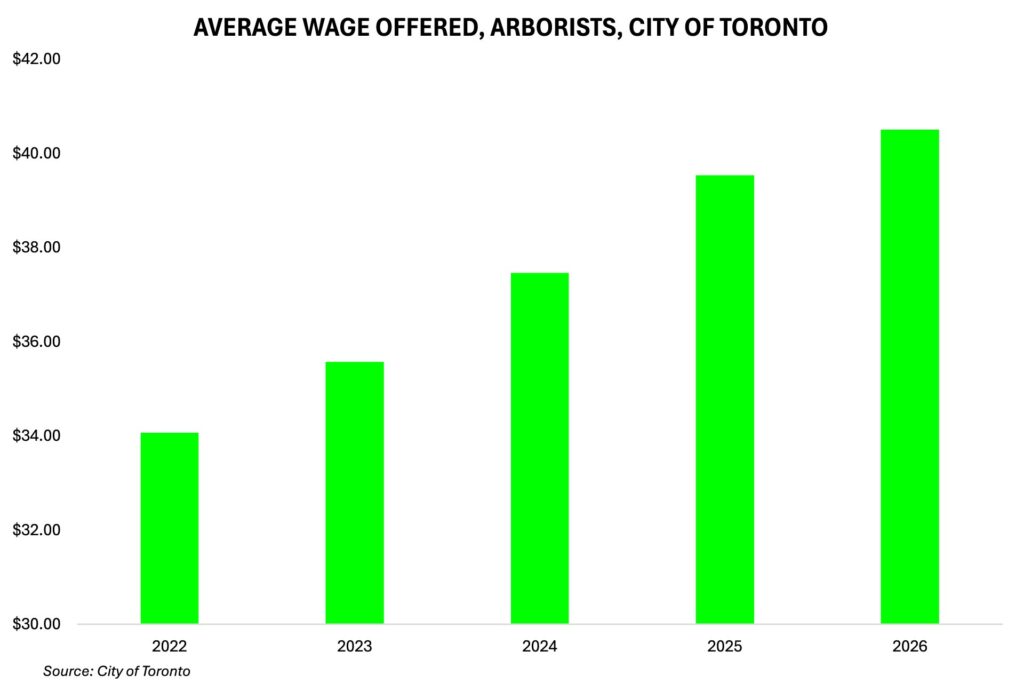
The labour market appears to recognize the value of these skills. Advertised arborist wages increased from an average of $34 in 2022 to over $40 in 2026, we out pacing inflation. As communities continue to invest in greener, healthier, and more resilient urban environments, arborists are proving that careers can grow just as steadily as the trees they care for.