Current Labour Market

Unemployment Rate November

8%

Down 0.5% from October

Average Wage

$40.17

Up 3.4% Year-over-year

Building Permits

Down $240 Million

Year-over-year

Total Employment Toronto CMA

3,728,300

Up 10,520 from October

Office Vacancy Rate

17.8%

Down 0.2% Previous Quarter

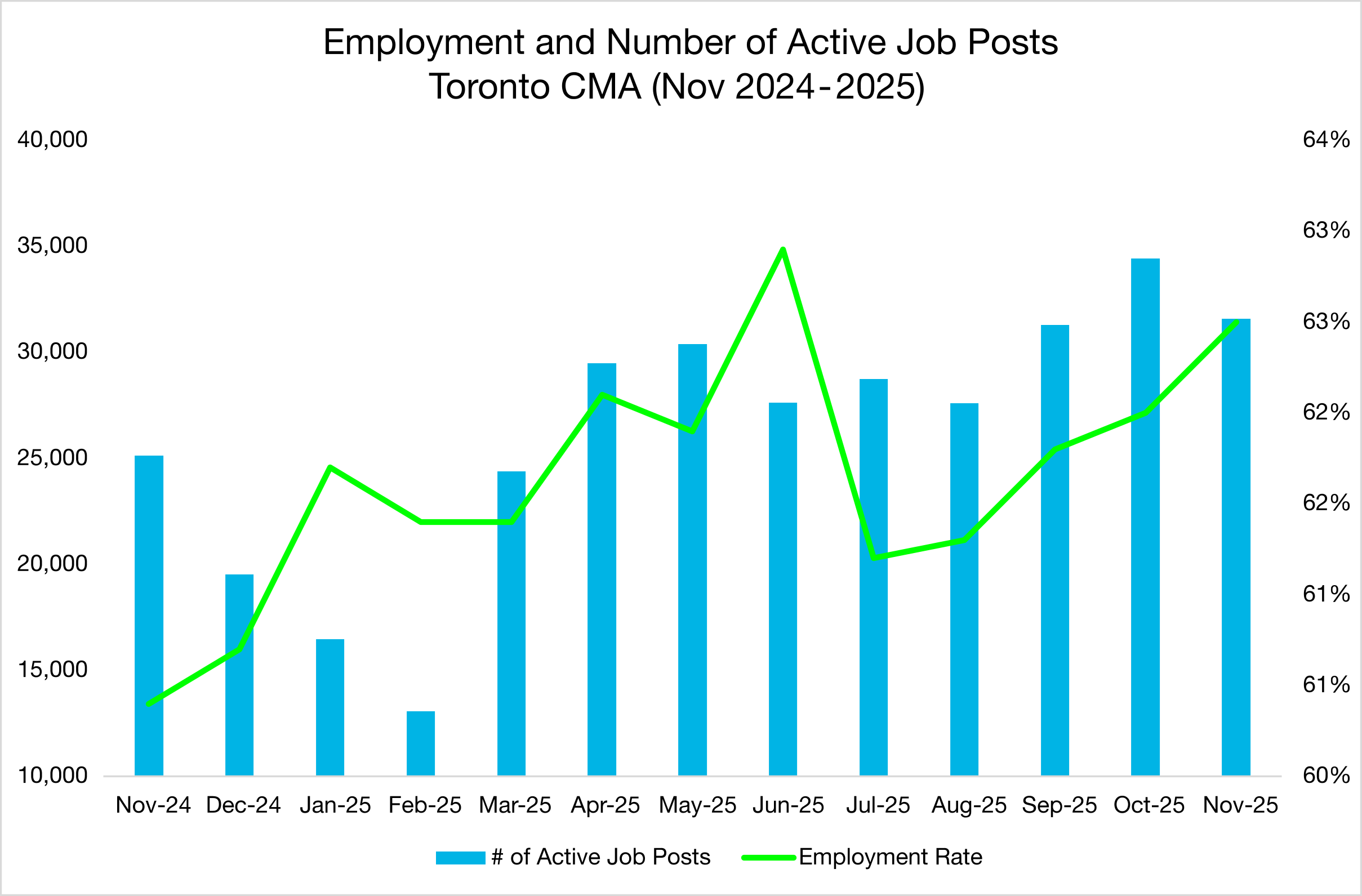
Active Job Posts

31,500

Down 5% from October

Average Length of Job Post

19.2 Days

Down 12.1 Days Year-over-year

Toronto Employment Edges Up

Toronto’s employment levels edged up slightly in November 2025, following several months of softening after a strong first half of the year. Total employment rose to 3.73 million in November, up modestly from 3.71 million in October, suggesting a degree of stabilization after late-summer and early-fall declines.


Month over month, gains were driven primarily by construction and utilities, which continued a steady upward trend, increasing from 237,500 in October to 240,400 in November. Transportation and warehousing also added jobs for a second consecutive month, rising to 249,100, extending a gradual recovery that has been underway since the spring.


Several service sectors posted modest month-to-month improvements. Professional, scientific and technical services increased again in November, reaching 552,800, continuing a pattern of incremental growth throughout much of 2025. Information, culture and recreation also expanded, adding jobs for a third straight month and reaching 191,900, reflecting sustained demand in digital, media, and cultural activities.


At the same time, other sectors continued to contract on a monthly basis. Manufacturing employment declined further in November, falling to 336,400, continuing a downward trend that has persisted since midsummer. Wholesale and retail trade also edged lower, reflecting weaker hiring activity heading into late 2025. Health care and social assistance declined for a third consecutive month, down to 387,100, following a mid-year peak.


Seasonally sensitive sectors showed mixed signals. Accommodation and food services remained elevated compared with early 2025 levels but slipped slightly in November, suggesting that the summer tourism and event-driven boost has begun to taper off. Education and public administration increased month over month, rebounding from earlier declines tied to seasonal employment patterns.

Focus On: Creative Industries

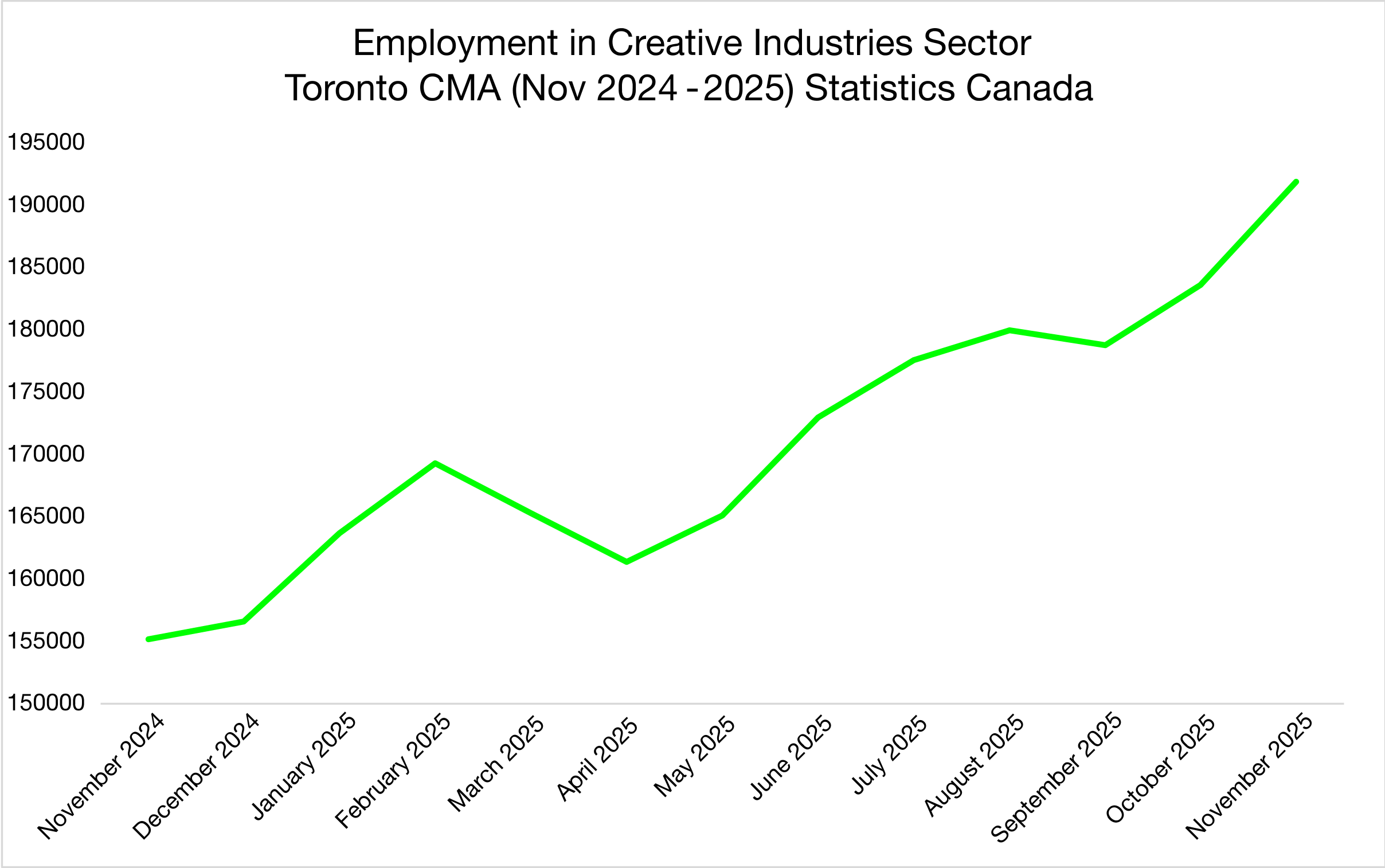
Creative Industries Show Renewed Momentum Heading Into Late 2025

Toronto’s creative industries posted a notable gain in November 2025, continuing a gradual upward trend that has been building since early fall. Employment in information, culture and recreation rose to 191,900, up from 183,600 in October and marking the highest level observed over the past two years.


The recent gains follow a period of volatility earlier in 2025. Employment dipped between July and October, reflecting softer activity in arts, entertainment, and media-related industries, before rebounding in November. The steady rise over the past two months suggests improving conditions, particularly as digital media, broadcasting, and cultural production ramp up toward year-end.


Employment growth is also visible within creative occupations, where jobs in art, culture, recreation, and sport increased to 141,300 in November, up from 136,600 in October. While still below peak levels reached earlier in the year, the month-over-month improvement points to renewed hiring after a late-summer slowdown.


JobsTO posting data reinforce this stabilization. In November 2025, there were 1,206 active job postings in the creative industries, down slightly from October but remaining well above levels seen earlier in the year. The number of companies hiring eased to 197, reflecting a more selective hiring environment, though still consistent with sustained employer demand. Hiring activity remains concentrated among large telecommunications, media, and technology-enabled firms, including Google, TELUS, Rogers, Bell, and CBC/Radio-Canada.


Demand continues to focus on roles that blend creative and commercial skills. Top occupations include retail sales and visual merchandising, program leaders in recreation and sport, corporate sales managers, and administrative officers, highlighting the operational and customer-facing backbone of the sector. Employers are also emphasizing transferable skills such as management, communication, sales, and leadership, rather than narrow technical specialization alone.


 

Author

  • Toronto Workforce Innovation Group is a non-profit and independent research organization devoted to finding and promoting solutions to employment-related problems in the Toronto Region.

    View all posts
December 2025 Labour Lowdown
Tagged on:         

Pin It on Pinterest

Help Us Serve You Better

We are collecting data to better understand who is looking for work and what kind of opportunities jobseekers are searching for. This data is completely anonymous and non-personally identifiable.

Your Age:

Skip to content